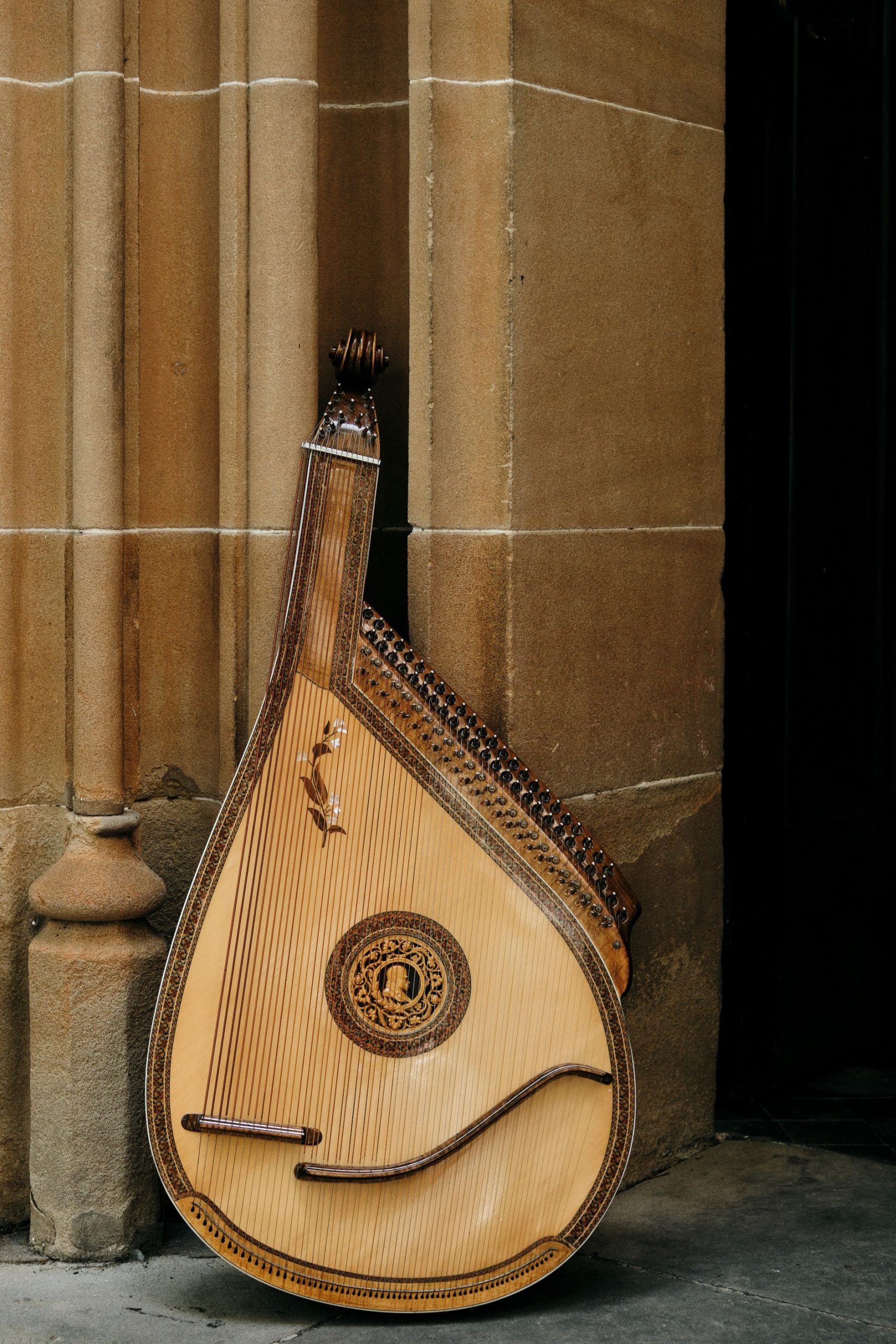
The bandura, Ukraine’s national instrument, stands as one of the most powerful symbols of Ukrainian identity, resilience, and cultural heritage. Its roots can be traced back to the 6th century, with early references found in Greek chronicles describing a lute-like instrument played by warriors in camps and on battlefields. Over centuries, this instrument evolved alongside Ukraine’s history, becoming both a musical voice and a cultural emblem.
Between the 15th and 18th centuries, blind travelling musicians known as kobzars journeyed from town to town, performing on the bandura while singing epic historical songs, Kozak ballads, folk melodies, and sacred psalms. These performers were guardians of oral tradition, preserving national memory and inspiring unity during periods of political oppression and foreign rule.
Originally modest in size with fewer strings, the bandura gradually developed into a sophisticated concert instrument. By the late 19th and early 20th centuries, it became fully chromatic, capable of performing complex classical and contemporary repertoire. Modern banduras may feature up to 65 strings spanning five octaves, with mechanical levers or switches allowing performers to change keys and tonalities with precision.
The sound of the bandura is uniquely expressive, blending the shimmering resonance of a harp with the clarity and articulation of a harpsichord. Played using both hands and fingertips, it allows for intricate textures, lyrical melodies, and rich harmonic accompaniment, making it equally powerful as a solo instrument or in partnership with the human voice.
Today, the bandura is taught in Ukrainian conservatories and music schools and continues to gain international recognition. Contemporary performers explore traditional repertoire alongside new compositions and cross-genre collaborations, ensuring the bandura remains a living, evolving instrument that connects history with modern artistic expression.